On the route · Boise Bench
The rest of the lineup
Same $99 diagnostic, same written quote, same written warranty on every machine we fix in Boise Bench.
The 1958 house on Kootenai St never had a dryer in the plan, so the vent runs thirty feet under the floor to a flap on the far wall. That vent, plus Bench dust and a dryer on its second decade, is why the towels take two cycles. We meter the heat circuit, measure the airflow, and write one number.
Mon–Fri 8am–6pm · Sat 9am–3pm · Sunday closed · same-day windows for a warm refrigerator
Same $99 diagnostic, same written quote, same written warranty on every machine we fix in Boise Bench.
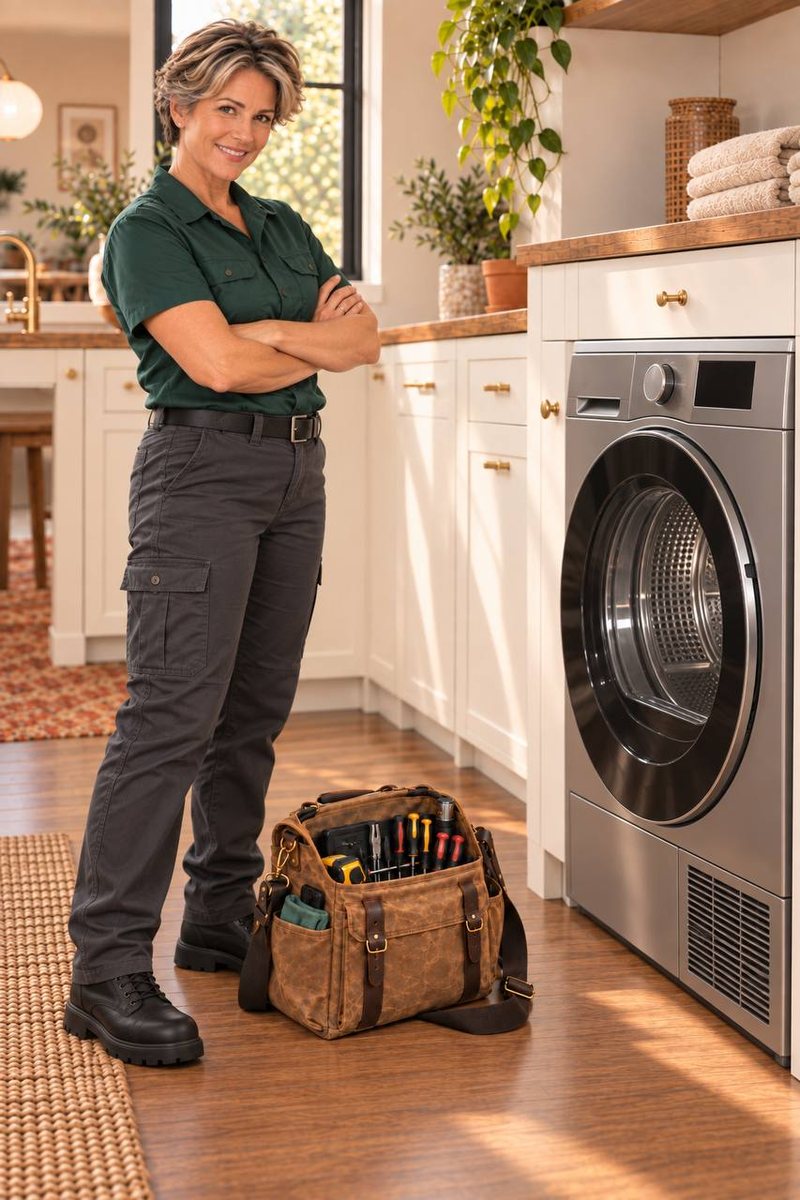
The Bench was built out between 1950 and 1975, in ranches and split-levels from Vista Village down to the Depot Bench and west along Overland Rd toward Cole Rd. Most of those houses got a dryer years after they were finished, which means the vent went wherever it could: through a crawlspace, up through a garage ceiling, or across a basement to a window well. Long runs with flex duct and several elbows hold lint, and the dust that rolls off the airport side of the Bench and up from I-84 adds to it. The route from our shop is twelve minutes, Five Mile Rd to Overland Rd, and we bring the vent brush on every dryer call.
What fails is predictable once you know the vent. Electric dryers overheat inside the cabinet, the high-limit thermostat opens repeatedly, and the thermal fuse eventually blows and stays blown. Gas dryers show it as a flame that lights and drops out early. Older machines add worn rollers, a stretched belt and a motor that runs hot. Rentals near Boise State and along Vista Ave see heavy use and a lot of overloading. A recent example: a fifteen-year-old Kenmore in a Latah St basement, tumbling cold, thermal fuse open, and a crawlspace vent so packed the flap outside had not moved in years.
Thermal fuse, heating element or high-limit on electric; igniter, flame sensor or valve coils on gas. The meter identifies which in a few minutes. On the Bench we also check the 240-volt outlet, since older panels and three-prong cords lose a leg and mimic a dead element. Replace the part, then measure the vent.
Airflow. Lint in a long crawlspace run, a crushed foil duct behind the dryer, or an exterior flap stuck shut with paint or a bird nest. We measure back-pressure, clean from the machine to the outside, and check the moisture sensor bars, which build up residue from dryer sheets and hard water.
Rollers, idler pulley or drum glides on a dryer that has been running since the early 2000s; a thump on each turn is a flat-spotted roller. We open the cabinet, spin the drum by hand, and replace the wear parts as a set rather than the one that happened to fail first.
The flame comes on and drops after a few seconds, which points to weak valve coils or a flame sensor that has drifted. We watch the flame through the port, meter the coils, and replace them. Gas connections behind older Bench dryers are checked with leak solution before we leave the house.
A motor that is running hot and tripping its thermal protector, usually because the vent is restricted and the cabinet is full of lint. Sometimes a door switch losing contact. We clean the interior, check the motor amperage, and measure the vent. A motor that has truly failed is replaced from the truck.
Stop the dryer. Lint has collected around the heater box or burner, or a seized roller is dragging. We pull the drum, clean the heater housing and the base, replace whatever seized, and clear the vent. A Bench dryer with a thirty-foot vent and a burning smell is not something to run one more load through.
Diagnosis begins at the outlet on the Bench, because the houses are old enough that the dryer circuit is sometimes the fault: a 240-volt receptacle with one dead leg gives a dryer that spins without heat. With power confirmed, the electric heat chain is tested in order with the meter, thermal fuse to high-limit to cycling thermostat to element. Gas dryers get igniter current, a flame check and a coil reading. The drum is turned by hand for roller and bearing noise. Then the vent: back-pressure measured at the dryer, the duct traced to the outside, and a decision made about whether the machine or the run is the real problem. One written number follows.
Bench dryers are a mix of long-serving Whirlpool, Kenmore and Maytag machines, newer Samsung and LG pairs from kitchen-and-laundry remodels, GE in the rentals around Boise State and along Overland Rd, and Speed Queen in the houses that decided to buy once. Parts for all of them ride on the truck. Property managers get tenant-side visits, approval by text, and the invoice and written warranty by email. Shift workers at the airport and at Saint Alphonsus can ask for early or late windows so the visit fits between sleep and the next shift. The $99 diagnostic is inside the repair price you approve; if you decline, $99 is the entire bill. Repair figures are written after the diagnostic, not estimated on the phone.
Yes, when the vent is part of the reason the dryer failed. We clean from the dryer connection to the exterior flap, including crawlspace runs, with a rotary brush. What we do not do is reroute or rebuild the duct; if the run itself is too long or made of the wrong material, the written report says so.
Not by itself. Many Bench houses still have three-prong 240-volt receptacles and they work fine with the right cord. What matters is whether both hot legs are live. If one has dropped at the breaker or receptacle, the dryer tumbles cold, and that is an electrician’s job. We test it first so you do not pay for a dryer repair you do not need.
Within the week as a rule, frequently the next business day. The Bench is twelve minutes from the shop off Overland Rd, so a call before noon often gets a window that afternoon. We work Monday to Saturday with early and late slots for airport and hospital shifts.
A dryer is a simple machine and a fifteen-year-old one with a bad fuse, element, roller or igniter is a normal repair. The written number lets you compare. Where it changes is a failed motor plus a worn drum on a low-end model, and we tell you that plainly rather than selling a repair that does not add up.
Yes. Landlords on the Bench side of the river schedule tenant-side visits; the tenant is home for the diagnosis, the owner approves the written number by text, and the paperwork goes to the owner. Overloaded dryers in student houses are a regular call in September.
Call (208) 813-1132 or send the form. Most requests get a callback within the hour in business time, with a real arrival window.
The technician tests the machine with a meter, names the failed part in plain words, and writes one flat price. The $99 is already inside it.
We stock the high-failure parts for the brands Treasure Valley homes actually own, so most jobs close on the spot; ordered parts return with no second trip fee.
Full test cycle before we pack up, a tidy work area after, and a written warranty in your hand.
One call starts it: $99 diagnostic, one written number, repair from the truck, written warranty.